Sunday, April 10, 2011

Earth Day, Every Day - Tip # 10 - Plant A Tree

We've all learned how trees conserve water, harbor wildlife and moderate climate. Trees also absorb air pollutants such as OZONE, CARBON MONOXIDE, and SULPHUR DIOXIDE -- and give off OXYGEN, which improves air quality.

Yet realistically, many people do not have the outdoor space to plant a mighty oak or a majestic maple, so plant what you can, where you can... forsythias by the road, a pine in the back yard, even a small plant in a pretty pot on a sunny windowsill.

You can also have a tree planted through the Arbor Day Foundation or through American Forests for a nominal charge of $1 per tree. Consider planting a tree in honor of a loved ones birthday or anniversary. It's a special gift that just may change the world.

Saturday, April 9, 2011

Earth Day, Every Day - Tip # 9 - Retire Your Aging Appliances

Replacing an older model refrigerator, dishwasher, or washing machine can made a huge difference on your energy bill. Purchasing new Energy Star appliances can save you up to 30% a year.

My new Energy Star refrigerator saves me about $30 a month over my old fridge - and it looks nice too!

Friday, April 8, 2011

Earth Day, Every Day - Tip # 8


Skip the Bottle

Bottled water may be convenient... it's also very expensive and a waste of resources.

Instead, purchase a filter style water carafe or install a water filtration system and get in the habit of carrying reusable BPA free water bottles.

After the initial outlay, your saving will add up as water filtered at home generally costs pennies per gallon, as opposed to prefilled water bottles which can cost a dollar or more per gallon.

Another huge plus, filtering your water saves the energy and OIL required to produce and deliver water bottles -- most of which are NOT recycled.

Thursday, April 7, 2011

Earth Day, Every Day - Tip # 7

Fix the Drip to Conserve Water and Save Money

A dripping faucet or toilet is a waste of water AND money.

Repairing or replacing a leaky toilet can save up to 200 GALLONS of water a day - that's 6000 Gallons a month or roughly enough to fill a good sized swimming pool!

Fixing a dripping faucet can save gallons of water daily as well!

Wednesday, April 6, 2011

Every Day, Earth Day - Tip # 6


Pay Your Bills Online

Paying online saves fuel (needed to ship your mail), trees (to print the stamps, envelope, check, etc.) and postage (.44 per envelope as of this posting)!

I find it easiest, and most secure to pay my bills via my banks secure website. Once I entered all the data required to set up a payment, I choose what name to call the payee. The data is now stored and only the name I gave it appears on screen. (Word to the wise, if you have two Verizon accounts, or similar, make sure you label them so you know which is which, so you don't pay the wrong one.)

Then, once a month I go in, select who to pay, how much and on what date. So simple, and no more concerns if my envelope arrived at the destination intact and on time.

Tuesday, April 5, 2011

Every Day, Earth Day - Tip # 5


Offset Your Carbon Footprint

Visit AmericanForests.org and use the Carbon Footprint Calculator to complete a short survey on your CO2 emissions, then learn how to offset your carbon footprint with trees.

Monday, April 4, 2011

Earth Day, Every Day - Tip # 4


See The Light

Switch from traditional incandescent bulbs to energy-efficient compact fluorescent bulbs (CFLs) or LED bulbs. Each CFL can save you up to $30. a year, with LEDs savings even more per year, plus a longer bulb life, and no mercury.

To give a comparison:
A regular 60 watt bulb lasts about 6 months and will use about $10 in electricity which means it will cost about $20 a year to light (plus the cost of two bulbs).

An equivalent CFL lasts about 3 years and will use about $16 in electricity which means it will cost about $5.50 a year to light (plus the cost of the bulb).

An equivalent LED lasts about 17 years and will use about $34 in electricity which means it will cost about $2 a year to light (plus the cost of the bulb). LEDs are absolutely the best long term savings, despite the larger upfront cost.

Please note that CFLs as well as all fluorescent bulbs do have a small amount of mercury so be sure to recycle them at Home Depot or another qualified recycler.

Sunday, April 3, 2011

Earth Day, Every Day - Tip # 3


Clean Up Your Act

Choose non-toxic concentrated cleaners.
Not only are they safer for you, your home and our planet, but because they're concentrates they save companies from having to ship water (think of all the gasoline that saves). After all, you have water at home, so use a concentrate and mix it yourself.

I especially like the top rated Get Clean line of household cleaners from Shaklee. They're highly concentrated, work well and are so inexpensive.

Saturday, April 2, 2011

Earth Day, Every Day - Tip # 2


Remember the 3 R's (Reduce, Reuse & Recycle)

In short, consider your garbage can to be a last-resort option, and use it sparingly.

Donate clothes that you no longer want or need. Same with books, furniture, glassware, etc. Many agencies such as Goodwill, Salvation Army or a local thrift store (most benefit a charity) will gladly accept your donations and give you a receipt you can use as a tax write off.

An environmental choice that benefits others.

Friday, April 1, 2011

Earth Day, Every Day - Tip # 1


To celebrate Earth Day and "Earth month", I'll be sharing daily tips to help you Live Green(er)!

BYOB (Tip # 1 - Bring Your Own Bag)

The answer to "paper or plastic?" is "neither." Whenever you go shopping, remember to bring your own bag! Reusable cloth bags are inexpensive, washable and hold a lot more than plastic or paper bags.

Buy a few bags and leave them in the car so you can bring them to the grocery store, Home Depot, everywhere. You may even find one of those tiny nylon bags that squishes up into a little package and easily fits in your purse or backpack.

Reusable bags, a little effort that has a big impact!

Wednesday, March 2, 2011

An enlightening video from the Story of Stuff team

I love the dedication of Annie Leonard and her team at The Story of Stuff. Here's another enlightening video!


So you're probably wondering how does this video relate to a Green blog? Easy, when corporations can funnel unlimited dollars to the candidates they want to get elected, Americans have less choice as "Joe Limited Funds" can't effectively compete with corporate backed "Joe UNlimited Funds".

The recent Supreme Court decision to grant corporations the same free speech abilities as individual Americans has in my opinion tipped the scales, giving corporations a louder voice than individual Americans. And since I don't usually feel corporations share the same values and interests I have, this scares me... and it should scare you too.

After you watch the video please let me know what you think.

Best of Health,
Susan

Tuesday, February 1, 2011

New type of Fundraiser... and its Green

Pretty much every parent has done it... asked family and friends to buy $1 chocolates or peruse catalogs filled with wrapping paper or candles (which they usually don't even want), all to support our kids school, sports team or whatever.

Enter California based solar installer Sungevity, offering a twist on the traditional fundraising program. The company recently announced that it's launching Sungevity.org, to offer nonprofits and schools the opportunity to earn money when they refer customers to Sungevity. Currently only available to schools and non-profits in California, Colorado and Arizona, the program is expected to expand to other states.

For each referral the school gets $500 - $1000! Sure beats a roll of wrapping paper that nets the school a few dollars, don't you think?

Best of Health,
Susan

Saturday, January 8, 2011

Is there more in your bottled wated than just water?

For many bottled waters the answer may be yes.

The Environmental Working Group has an eye opening article on this very topic.

Best bet, filter your water at your tap. Saves disposing of all those empty water bottles, plus it saves you plenty of hard earned dollars... and that's always a good thing!

I recently ordered a sleek new pitcher with a years worth of filters and I love it, and the kids love the taste of the water!

Wednesday, December 22, 2010

Discarded, Expired Pharmaceuticals end up in Americas Waterways

The average American may be shocked to know just how much expired, unneeded, spoiled and/or unwanted pharmaceuticals end up in our waterways. Most would think why is this a worry... a few pills tossed down the toilet is a quick and easy way to dispose of leftover or unwanted prescription medications, and what can the harm be?

Sadly the huge amount of pharmaceuticals being flushed down the drain by individuals and care facilities are quite possibly causing minuscule concentrations of Rx medications in our drinking water. Over the years, researchers have alerted us that even extremely, extremely diluted concentrations of pharmaceuticals harm fish, frogs and other aquatic species. And it's not a stretch that these diluted concentrations may affect humans as well...

And in my eyes, all of this is so unnecessary. I encourage you to contact your local town hall and find out when your medication disposal days are, so you can safely discard your unwanted, expired and unneeded medications.

Sunday, December 12, 2010

Fast Food, Take 2: Five Guys Burgers & Fries

Okay, so I'm not a big take-out, fast food fan or eater.

I follow the saying "I can eat anything I want, as long as I've taken the time to make it myself from scratch." French fries, apple pie, decadent desserts, you get the picture. I feel that I can indulge every once in a while, as long as I make it myself and don't make it a regular habit. But what if hubby and the kids are starving as you're heading home from vacation...

Recently my family and I stopped at Five Guys Burgers and Fries, a Zagat rated fast food chain. They've won numerous Zagat awards and hubby couldn't wait to visit. According to their literature they have no freezers on the premises, just coolers to keep the meat fresh, and each burger is made and served to order that day.

And wow, what a pleasant surprise. The fries were hot and crispy and the burgers were moist and juicy and made with our choice of toppings! Each burger a special order made your way! Everyone left feeling full and satisfied and I felt better that it was all freshly prepared.

We still won't be headed to a fast food place, even one that's Zagat rated on a regular basis, but it's nice to have found a chain where the food is made fresh. And next time I'll remember to order a little Five Guys burger as the regular burger was actually a double burger -- not that my dog complained.

And I hope the success of Five Guys spurs other fast food places to prepare fresher (and healthier) foods.

Wednesday, November 10, 2010

Does Living Green mean giving up Fast Food?

Living green means many different things to me... living simply, making wise choices, eating local, recycling, reusing, reducing, choosing toxin free everything, etc., etc.

In terms of food, I've always felt it's best for my health and my wallet to eat in, using fresh ingredients I've purchased and prepared - better yet if those ingredients are from my local farmer's market.

Not to say I don't eat out, I do. I LOVE restaurants and take-outs offering natural (I should be careful with that word, mercury after all is natural...), wholesome, healthful food, and I'm very fortunate to have quite a few local places, that make fabulous food from scratch.

So as I share this article about McDonald's Chicken McNuggets, I'm wondering why on earth you'd add dimethylpolysiloxane, an anti-foaming agent made of silicone, to fried chicken? And what would even make someone think of adding it to food?

Let alone tertiary butylhydroquinone (TBHQ), a chemical preservative and form of butane, that according to according to A Consumer’s Dictionary of Food Additives, is so deadly that just five grams can kill you!

I think most Americans are well aware that deep fried McNuggets aren't the healthiest choice, but that they contain an anti-foaming agent made of silicone. I'll guess that's a surprise.

Organic Authority recently posted the full ingredients list provided by McDonald's website, for their Chicken McNuggets:

"White boneless chicken, water, food starch-modified, salt, seasoning (autolyzed yeast extract, salt, wheat starch, natural flavoring (botanical source), safflower oil, dextrose, citric acid, rosemary), sodium phosphates, seasoning (canola oil, mono- and diglycerides, extractives of rosemary).

Battered and breaded with: water, enriched flour (bleached wheat flour, niacin, reduced iron, thiamin mononitrate, riboflavin, folic acid), yellow corn flour, food starch-modified, salt, leavening (baking soda, sodium acid pyrophosphate, sodium aluminum phosphate, monocalcium phosphate, calcium lactate), spices, wheat starch, whey, corn starch.

Prepared in vegetable oil (Canola oil, corn oil, soybean oil, hydrogenated soybean oil with TBHQ and citric acid added to preserve freshness). Dimethylpolysiloxane added as an antifoaming agent."

As a dear friend, who also happens to be an M.D says, "if you really must have fried chicken (or something equally high cal and unhealthy ie: french fries), eat it as often as you're willing to make it at home, from scratch."

In my opinion, the McNuggets ingredient list gives you another reason to make it yourself... as for me, I'm headed over to Bartlett's Farm for some fresh ingredients for a delicious (and healthy) soup.

Best of Health,
Susan

Friday, November 5, 2010

Living Green and the Cancer Question...

If you knew for sure that doing "x, y and z" would make you (and your loved ones) bulletproof to cancer, would you make a change to do "x, y and z"? Even if it cost you more? More effort, more time, more money?

What started me thinking about this question is a radio telethon being done by WHUD for a local hospital, the Maria Fareri Children’s Hospital at Westchester Medical Center. They're sharing successes and the stories are both heart wrenching and heartwarming. To listen to the parents and children speak of their ordeals brings tears to my eyes. And it got me to thinking about "x, y and z."

Over the years it's been well documented that exercise decreases the risk of cancer and many other health concerns, yet many Americans are couch potatoes. It's also well documented that eating more fruits and vegetables AND avoiding pesticides and herbicides on our food is healthier for us, and the planet, yet many feel they can't afford the extra cost. HealthyChild.org, The Environmental Working Group and The National Institute of Health have shined a light on ingredients of concern, some linked to serious health issues, in many household cleaners, yet Americans still choose them over non-toxic green cleaners which are safer.

The reality is that no one knows exactly what causes cancer, especially in a child. And doing "x, y and z" won't Guarantee that you or someone in your family won't get the big C... but what if those simple changes were truly the answer to a big part of the puzzle?

I realize I'm making this all too simplistic and sadly families doing all the right things may still wind up with a member who gets cancer since there are things we simply have no control over, such as the air we breathe, the pesticides used on our neighbors lawn, or in the office we work... but what if getting a little more exercise, choosing toxin free foods, and clearing the toxic cleaners from your home are a big part of the answer?

It really can cost so little monetarliy. Exercise doesn't have to mean joining a gym, instead strap on a pedometer and go walk the track at your local high school. Try to get in 10,000 steps every day.

Choosing organic food does cost a bit more, but going green for cleaning can save you more than enough to make up for the added cost of healthier food, and the added health benefits, Priceless (even if your not bulletproof for cancer).

Best of Health,
Susan

Tuesday, November 2, 2010

Election Day 2010

Today is Election Day in the USA. If you voted early or absentee, great you're done. Thank you! If you've not yet voted, please exercise your right as an American citizen and vote.

Monday, November 1, 2010

The Chemical Soup We Live In


Unless you've been avoiding the news for years, you know that plastics used for water bottles, beverages and canned goods often contain bisphenol A (BPA), a chemical that may effect our health, and not in a good way.

In a recent study, more than 90% of Americans were found to have BPA in their urine, and those with the highest levels of BPA in their urine were two times more likely to suffer from heart disease and diabetes as those with the lowest level of BPA in their urine. As a result of this study and others, many experts are now recommending that we use only glass or stainless steel bottles for drinking water.

But it's not just BPA that we should be concerned with. Triclosan in deodorants, toothpastes and antibacterial products; Teflon to create non-stick cooking surfaces; phthalates in personal care products, the list goes on and on.

I recently heard this audio and thought I'd share it with you. The speakers, authors of the book Slow Death by Rubber Duck, have used themselves as guinea pigs to show just how quickly some chemicals get into our bloodstreams.

Should we be concerned? Probably, since everyday we're exposed to chemicals... in the air we breathe, the food and beverages we eat, and even in the fabrics that we wear or touch. Obviously we can't avoid all chemicals, but some may be of greater concern than others, and may be within our control if we just make a few changes.

Best of Health,
Susan

Tuesday, October 26, 2010

A New Name for High Fructose Corn Syrup?


The U.S. FDA has been petitioned by the Corn Refiners Association (CRA) to allow high fructose corn syrup (HFCS) manufacturers the option of using the term “corn sugar” instead of “high fructose corn syrup.”

The CRA feels that “independent research demonstrates that the current labeling is confusing to American consumers.” They blame “inexact scientific reports and inaccurate media accounts” for the bad rap HFCS has gotten.

Now I'm not a scientist, so I won't debate the health effects of HFCS over other sugars. What I can state is that Americans are consuming way more sugar than they think they are (HFCS is in so many products), and way more than is healthy. Also, most corn in this country is Genetically Engineered (GE) corn which gets us into a whole different discussion.

What to do? Limit your intake of HFCS by reading labels, and work toward reducing your overall sugar intake. And lest you think artificial sweeteners may be a safer choice, check out this article by Dr. Oz.

To avoid HFCS completely, we choose products that are 100% juice or organic, neither will have HFCS.

Best of Health,
Susan

Tuesday, October 19, 2010

Living Green and the upcoming elections

As we get into the last few weeks of the 2010 elections I'm sharing a post from Greenwise with some thoughts for us all, regardless of political persuasion.

Friday, October 15, 2010

Living Green 101


Often people think they have to go green all at once. I didn't and I'd venture to say that most go green gradually. It's a process. You start with one thing and then add another, and another.

Perhaps step one will be to flip out the light when you leave a room, turn off the water while you brush your teeth or replace a few incandescents with CFLs. Next you unplug energy hogs (like your TV) when not in use. I've purchased power strips for my elctronics and just flip them off when they're not being used.

I'd next encourage you to purchase an organic version of a food you're already buying. If you choose carrots or celery the cost difference is minimal.

Once you've done that, replace one or two regular cleaning products with non-toxic versions.

Before you know it, over time you'll have gone green and although some things may have cost you a bit more, others should have saved you some green.

Monday, October 4, 2010

Elevated Blood Sugar and Cancer - a connection?

I received this a while back from a friend I respect. In honor of National Breast Cancer Awareness Month, I share it with you...

"You put on a few extra pounds - especially around the middle. Your blood sugar goes up a bit. Is that a big deal? What's the worst that could happen?

Try cancer for starters!

When your blood sugar levels go up, your body produces more insulin and a protein called insulin-like growth factor to try and keep your blood sugar levels under
control. And both of those hormones stimulate the growth of cancer cells.

This has been known for years, but scientists have argued as to whether this was a real concern or just of theoretical interest.

Two recent studies - one in Korea and one in Sweden - have shown that this is a very real concern.

The Swedish study, published in the December 2009 issue of PLoS Medicine, followed 550,000 residents of Sweden, Norway and Austria for 10 years. It showed that high blood sugar levels increased the risk of cancer by 11% for women and 5% for men.

The cancers most affected by high blood sugar levels were cancers of the pancreas, gallbladder, liver and bladder - although the incidence of most other cancers was increased as well.

Interestingly, prostate cancer - the most common form of cancer in men - was not affected by high blood sugar levels. That explains why the effect of high blood
sugar on cancer incidence was lower in men than in women.

So what can you do if your blood sugar levels are starting to creep up? You probably know the answer already!

Weight control and exercise are the most important keys to keeping your blood sugar levels under control - although proper diet and appropriate supplementation are also important.

To Your Health!
Dr. S. G. Chaney"


Time to drop those extra pounds and get some exercise -- it's a recipe for good health for all of us.

Best of Health,
Susan

Friday, October 1, 2010

Think before buying that "PINK" product


October is National Breast Cancer Awareness month... and those cute little pink ribbons are on a gazillion products.

You can purchase pink appliances as well as well as sneakers and fitness equipment that support Komen for the Cure.

Also sporting the pink ribbon are sugar laden cereals, cake mixes and frostings, paraben containing makeup and personal care products, and cookies loaded with saturated fat. Now I realize the Marlboro man isn't sporting a pink ribbon but are all things "pink" really good for our health, and shouldn't they be?

For me, those pink ribbons won't change how I shop. I'll purchase the products I regularly do, virtually none of which have a pink connection. Then in honor of the month I'll gladly make a donation to one of my favorite charities, Community Cares, a non-profit that benefits young women dealing with a health crisis - usually cancer.

And of course I'll continue to educate and advocate for safer products, because GREEN really does go with everything, and perhaps safer products will lead to less cancer...

Best of Health,
Susan

Friday, September 10, 2010

Shaklee's Non-Toxic Cleaning Products top the list of Cleaners the Pros LOVE


Reader's Digest has a new article titled 5 Cleaning Products the Pros Love.

Personally I love their number one suggestion of Shaklee's Basic H2 concentrate and Scour Off Paste. I've used both of these in my home for over 30 years and absolutely love how easily they clean.

But I'd like to share why I choose a concentrate like Shaklee's or Mrs. Meyer's which costs more to buy, over a ready to use product which costs way less.

Simply because in the long run concentrates not only save me money, they save plastic too, and since one bottle of Shaklee's concentrate makes hundreds of bottles of powerful green cleaner, the savings in plastic manufacturing costs (oil), product shipping and plastic bottle recycling, is significant. So my initial investment of $15, saved me hundreds of dollars over the $3 ready to use product, and kept hundreds of bottles from needing to be manufactured, shipped and recycled.

Bottom line, whenever possible, if your favorite product is available as a concentrate, buy it, the savings are exponential.

Monday, September 6, 2010

Vitamin D linked to cancer, autoimmune disease genes


As we observe Labor Day 2010, much of the US with a beautiful sunny day... I hope you spent some time outside soaking up a little sun. A recent Reuters reported:

"Scientists have found that vitamin D influences more than 200 genes" and that "Vitamin D deficiency is a well-known risk factor for rickets, and some evidence suggests it may increase susceptibility to autoimmune diseases such as multiple sclerosis (MS), rheumatoid arthritis and type 1 diabetes, as well as certain cancers and even dementia."

Now I'm not worried about rickets, but getting enough Vitamin D, for a healthy immune system is tops on my list. During the summer months it isn't too difficult if you spend at least 20 minutes daily out in the sun. However, the winter months are another story for those of us who live north of Atlanta. Scientists have found it's very difficult, bordering impossible, to get enough sunlight for our bodies to be at optimal Vitamin D levels. Eating foods high in Vitamin D such as salmon, mackerel, herring, eggs, and fish oil will boost your Vitamin D, but for many, including myself, a supplement is the only guarantee that we're getting enough D.

So enjoy the last few weeks of summer by spending a bit of time outdoors everyday. Your immune system will appreciate it!

Sunday, August 29, 2010

Miacomet Pond Clean Up


Saturday I biked over to Miacomet Pond to volunteer with the Nantucket Clean Team. The Clean Team is a dedicated group of volunteers who heads out every Saturday morning, spring to fall, to a different part of the island, to pick up trash and recyclables.

As I got to the head of the pond near the small spit of beach that divides the pond from the ocean, I had a little trouble finding the group. My thanks to Cassie and her Mom who pointed me in the right direction. Once I found the car with the supplies I donned my blue gloves, grabbed a clear bag for trash, and a paper bag for recyclables and headed off down the road picking up trash, cans and bottles along the way. An hour later everyone met back at the supply vehicle to sort the recyclables. After which I said thanks to all the volunteers and then headed back to my bicycle to enjoy the day, feeling grateful to all volunteers for what they do.

Special thanks to Sarah, Grant and Bill for all they do to organize the clean ups and for their dedication to keeping Nantucket clean and green! You are so very much appreciated!

See you in a few weeks.

Friday, August 27, 2010

People Matter, Things Don't - The Story of Stuff at the Nantucket Atheneum

Last night my daughter and I went to the Nantucket Atheneum to hear Annie Leonard, author of The Story of Stuff speak on every one's obsession with stuff and it's effect on us, the planet and what we can do about it.

Annie began by sharing that she took a tour of the Madaket dump that morning and was thrilled at the recycling rates on Nantucket - 92%! Kudos to Nantucket town, it's citizens and visitors for that achievement. Unfortunately, much of the USA is not doing anywhere near that well. Let's face it, most Americans generate a LOT of trash, on average, 4.5 lbs. per citizen in the US.

Annie also shared that we're going through way more resources than the Earth can provide, somewhere between 1.3 and 1.6 TIMES the Earth's resources, each year. Hardly a sustainable pace.

So what can we do about it? First, watch the Story of Stuff video. Second, choose non-toxic products from cleaning to personal care to electronics and appliances. The Good Guide is a great place to start, although not all brands are listed. Third, vow to do without that umpteenth pair of shoes or another new whatever. In other words stop buying what you already have. Next, donate what you don't need to the Hospital Thrift Shop, "Madaket Mall," FreeCycle, or wherever - pass it on to someone who needs what you no longer need.

And last but by no means least, invite a few friends over... for coffee, for appetizers, for dinner, for dessert, just because. Life is about living, and it's about people. What makes us happiest is not all the stuff, it's the connections and friendships we make and have. So call a friend and get together!
_________________________________________________

Annie was invited to speak at the Nantucket Atheneum by ReMain Nantucket. Their mission is "dedicated to strengthening the lasting economic, environmental, and social vitality of downtown Nantucket, while preserving its unique character and spirit." Thank You!

Thursday, August 19, 2010

EPA bans aldicarb, toxic pesticide - better late than never


First registered in 1970 for use on cotton, Temik (also know as aldicarb) has been used on numerous crops including cotton, peanuts, potatoes, citrus crops, soy and sugarcane. Forty years later the FDA now says "aldicarb doesn't meet US food safety standards."

Thank you. But I wonder what took so long. Why? Because back in 1985, quite a few people became ill after ingesting watermelon that had been sprayed with aldicarb. Now 25 years later the EPA has decided to take action, but this will be slow too, because under the agreement with the EPA, the manufacturer Bayer CropScience won't stop manufacturing aldicarb until 2015! Although use on citrus and potatoes will end in 2011.

As always, it's buyer beware when it comes to choosing wisely for yourself and your family, especially for infants and toddlers. So what to do? Choose organic if you can. If that's not an option, buy local at your local Farmer's Market - it's the next best thing! And last but not least, refer to the Dirty Dozen list of foods that are most contaminated with pesticide residue. Also check out the Clean Fifteen list at the same link (scroll down).

Wednesday, August 11, 2010

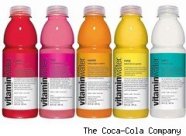
It's unhealthy... the VitaminWater lawsuit


"Coca-Cola is being sued by a non-profit public interest group (The Center for Science in the Public Interest) on the grounds that the company's vitaminwater products make unwarranted health claims." Read the article here.

Duh, you think? But to me, the really BIG news is the company's official response:

"Lawyers for Coca-Cola are defending the lawsuit by asserting that "no consumer could reasonably be misled into thinking vitaminwater was a healthy beverage."

So does that mean that The Average Joe is
A) naïve
B) an idiot, or
C) "it's okay for a corporation to lie about its products, as long as they can then turn around and claim that no one actually believes their lies?"

The name "VitaminWater" makes you think of a drink that is water with some added vitamins - the perfect ending to a good workout. It's not until you read the label that you discover that it's full of added sugar -- 30+ grams to be exact, plus 125 calories per bottle! So much for that workout.

Bottom line, read labels, and please, don't rely on a soft drink company for your vitamins or other essential nutrients.

Anyone for some filtered water?